Showing posts with label demolition. Show all posts

Friday, September 15, 2017

Bristol


Sledgehammered

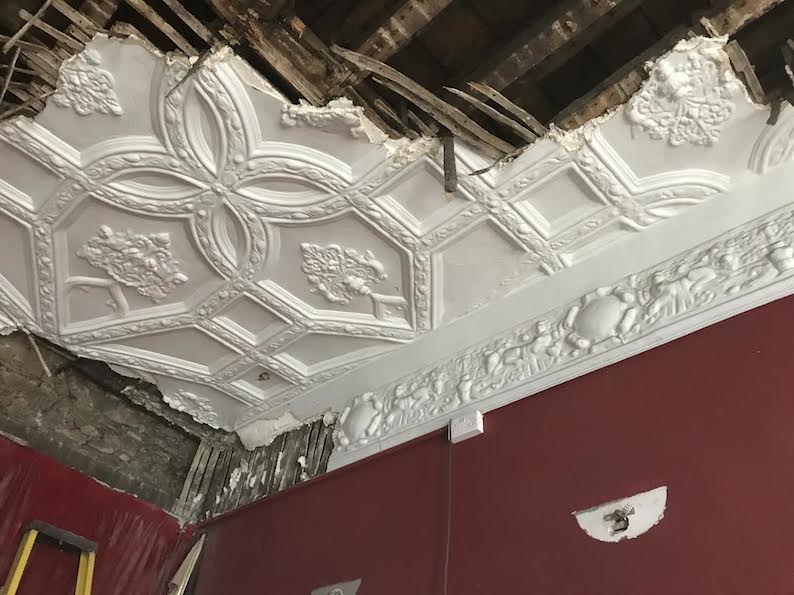
I was saddened to read about the demolition of a Jacobean plaster ceiling in a building in Bristol the other day. This beautiful piece of craftsmanship, which was neatly 400 years old, was in a building in Small Street which had been a bar and which a developer is converting into student flats. The removal of the ceiling was quite legal, but an application had been made to protect the building by listing it and the destruction of the plasterwork was carried out before the listings officers from Historic England had been able to inspect the building and carry out their assessment.

This sort of thing is not unusual. My mind went back to one of the most famous cases, the Firestone factory in West London, which was bulldozered over a Bank Holiday weekend in 1980, hours before a listing was due to come into force. The Bristol case is different – even if they’d had the chance to look at it, the inspectors may have decided not to list the building – but just as deplorable: 400 years of history gone with a few strokes of the sledgehammer.

There is a way of making pre-emptive demolition more difficult: introducing interim protection of buildings while the listings assessment takes place. Such a system already operates in Wales and in the opinion of many it’s time it did in England too. A petition, supported by groups such as the C20 Society, has been started to urge the government to bring in such a measure. I’d encourage readers who can do so to sign the petition here.

- - - - -

The picture above comes from the SAVE Britain's Heritage website, where there is more about the ceiling here

Wednesday, August 20, 2008

Stoke Edith, Herefordshire

Lost domains. The twentieth century saw the obliteration of hundreds of country houses. Agricultural depressions and the resulting falling rents, the carnage of the First World War and the consequent disappearance of a vast swathe of the servant class, the Second World War, trumping the First with more deaths and death duties, the wear and tear put on buildings that were requisitioned during wartime, and escalating repair costs – all these things meant that for many country-house owners demolition was the only way out. And in such a climate, if a house succumbed to damage in some other way – a fire, say – it was unlikely to be rebuilt. In 1955 the peak of demolitions was reached: that year roughly five houses were bulldozed every fortnight.

Often, there’s nothing left at all of these places, but now and then something survives – some service buildings, perhaps, or gate lodges. Lodges are usually big enough to make a small house, small enough to be maintained without punishing expense. They’re also generally a fair distance from the main house (those mile-long drives) so the bulldozer passes them by. Some of these resilient survivors are little architectural gems.

This lodge at Stoke Edith, on a bend in the road between Ledbury and Hereford, was once the prelude to a beautiful 17th-century country house. The lodge itself dates from 1792, but its brick and stone dressings presumably echo the materials of the older house, which was destroyed in a fire in the 1920s. The sixteen-sided footprint of this little building is about as complex as they come, and the dome, with its central chimney, is a memorable touch. The inventive architect was William Wilkins (father of the better known William Wilkins who designed the National Gallery). He obviously had flair. Little did he know that his small contribution to this Herefordshire estate would long outlast the big house, and remain for 80 years and more after its demolition to signpost the vanished mansion and make the passing traveller smile. Stoke Edith House